Selling to the EU After Brexit: VAT, IOSS and Ecommerce Compliance
Selling to the EU After Brexit: VAT, IOSS and Ecommerce Compliance
Selling products into the EU used to feel relatively straightforward for UK ecommerce businesses.
Then Brexit arrived… and suddenly words like customs declarations, import VAT and IOSS became part of everyday business life.
Several years later, many ecommerce sellers are still trying to work out exactly what rules apply to them.
So here’s a simplified guide to where things stand.
Why Selling to the EU Changed After Brexit
Before Brexit, UK businesses could sell goods to EU customers under EU distance selling rules.
Now, the UK is treated as a non-EU country.
That means ecommerce businesses selling into Europe may now need to deal with:
- Import VAT
- Customs declarations
- EU VAT registrations
- IOSS rules
- Different marketplace obligations
Which sounds exhausting because… honestly, sometimes it is.
What Is IOSS Again?
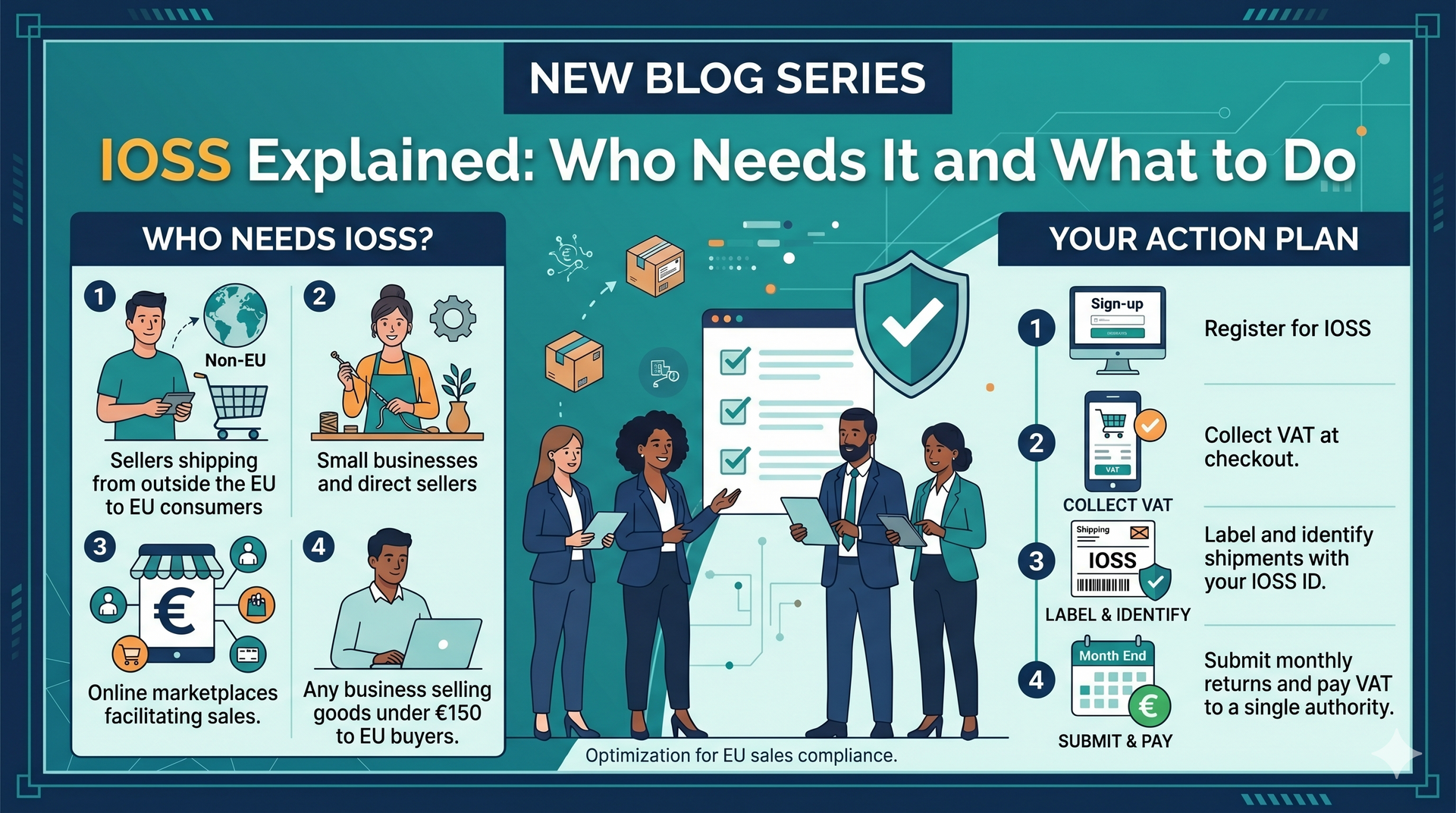
IOSS (Import One Stop Shop) is an EU scheme designed to simplify VAT collection on low-value goods imported into the EU.
It applies to consignments valued at €150 or less.
Instead of customers paying VAT when parcels arrive, VAT is collected at checkout and reported through monthly IOSS filings.
This generally creates:
- Faster customs clearance
- Fewer surprise customer charges
- Smoother deliveries
And fewer angry emails asking why a parcel is being held hostage by customs.
Does Every Ecommerce Business Need IOSS?
Not necessarily.
Whether you need IOSS depends on things like:
- Where your goods are stored
- How products are shipped
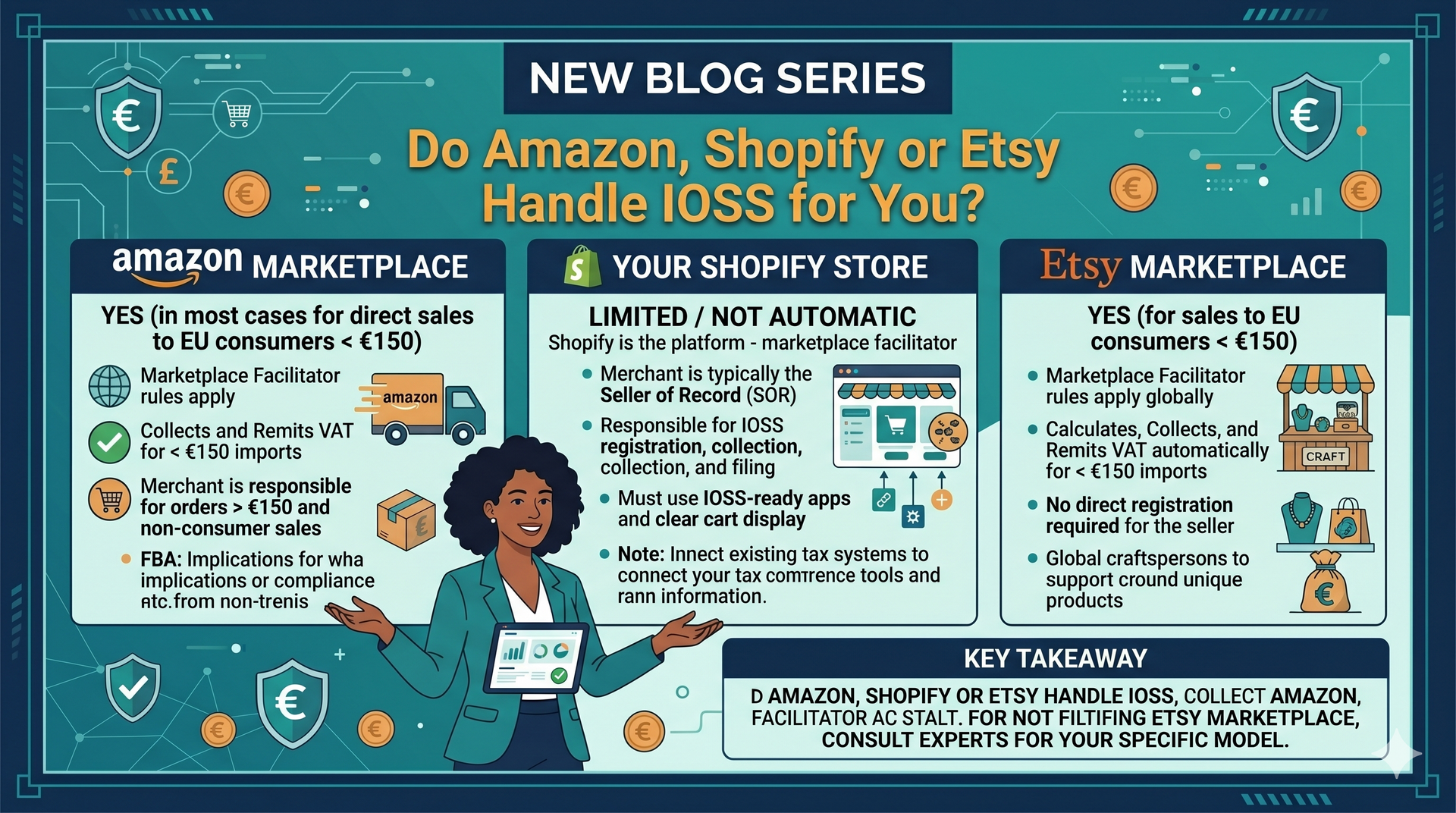
- Whether marketplaces collect VAT for you
- Your average order values
- Whether you sell B2B or B2C
Every ecommerce setup is slightly different.
What About Amazon FBA and EU Warehouses?
This is where things often become more complicated.
If stock is stored within the EU — for example using Amazon FBA or EU fulfilment centres — businesses may trigger local VAT registration obligations.
That means IOSS alone may not cover everything.
Many sellers are surprised to discover they may need:
- VAT registrations in specific EU countries
- Ongoing EU VAT returns
- Additional reporting obligations
The physical movement of stock matters just as much as the sale itself.
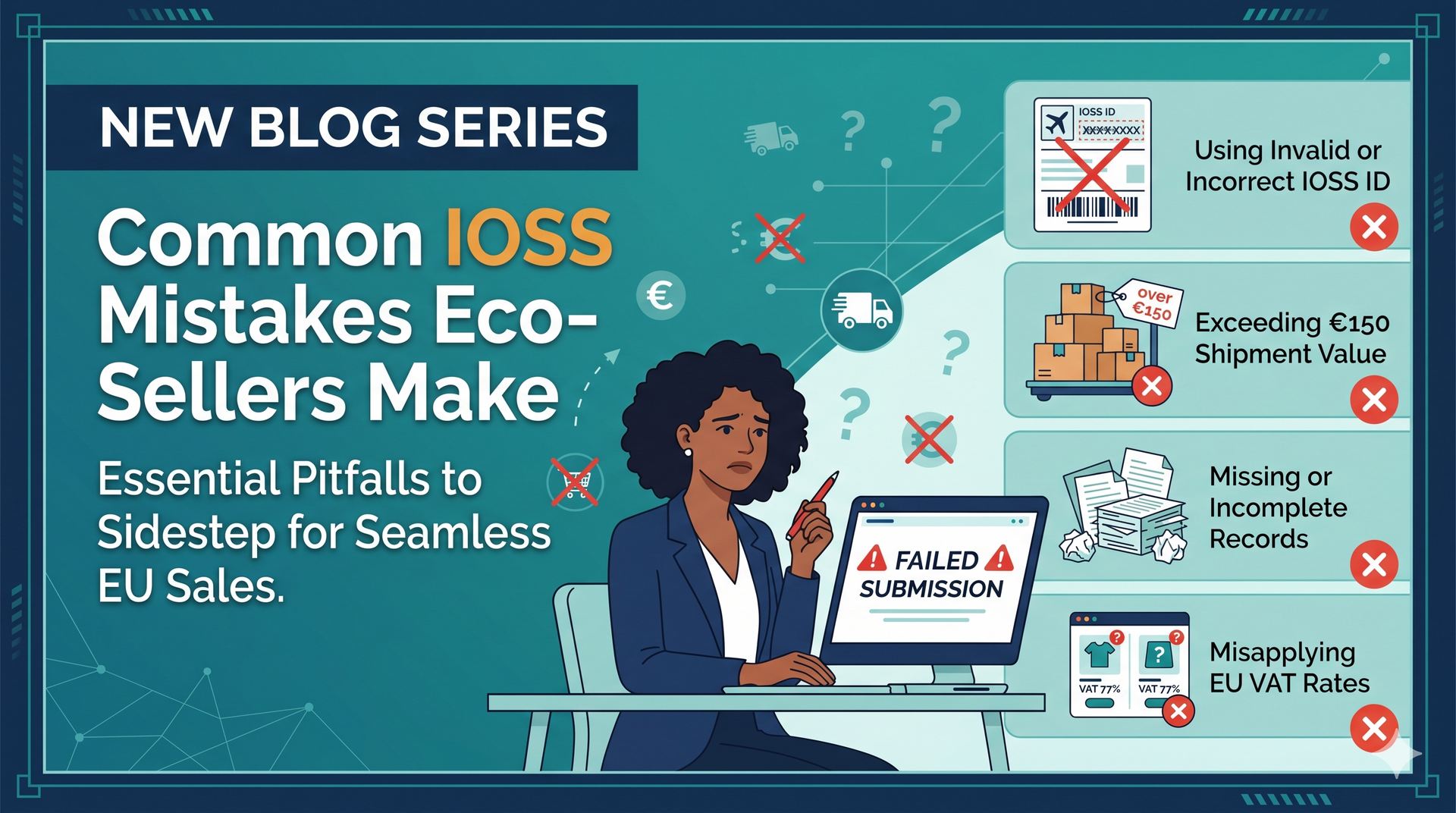
Common Problems Ecommerce Businesses Face
Some of the biggest post-Brexit ecommerce challenges include:
- Customers refusing parcels due to extra charges
- Delays at customs
- Incorrect VAT setup at checkout
- Marketplace confusion
- Double taxation issues
- Unexpected overseas VAT registrations
For smaller ecommerce businesses especially, it can feel like the rules change every five minutes.
✔️ What Should Ecommerce Businesses Do?
If you sell to EU customers, it’s worth reviewing:
- Where your stock is physically located
- Whether marketplaces collect VAT on your behalf
- Whether IOSS applies to your business
- Your shipping and checkout processes
- Whether you may have overseas VAT obligations
The earlier issues are identified, the easier they are to fix.
How File Tax Go Can Help
At File Tax Go, we help ecommerce businesses navigate:
- EU VAT obligations
- IOSS guidance
- Marketplace VAT questions
- Ecommerce compliance reviews
Selling into the EU is still a huge opportunity for UK ecommerce businesses — but compliance matters more than ever.
A proper review of your VAT setup can help avoid delays, unhappy customers and expensive surprises later.
Share
You might also like