Common IOSS Mistakes Ecommerce Sellers Make
Common IOSS Mistakes Ecommerce Sellers Make
When ecommerce businesses first hear about IOSS, the reaction is usually one of two things:
- “Great, this sounds straightforward.”
- “Wait… what?”
The reality is that IOSS can simplify selling into the EU — but only if it’s set up properly.
Once marketplaces, fulfilment centres, shipping providers and VAT rules all enter the chat, things can get messy quite quickly.
Here are some of the most common IOSS mistakes we see ecommerce businesses make (and how to avoid them).
Mistake #1 — Assuming Marketplaces Handle Everything
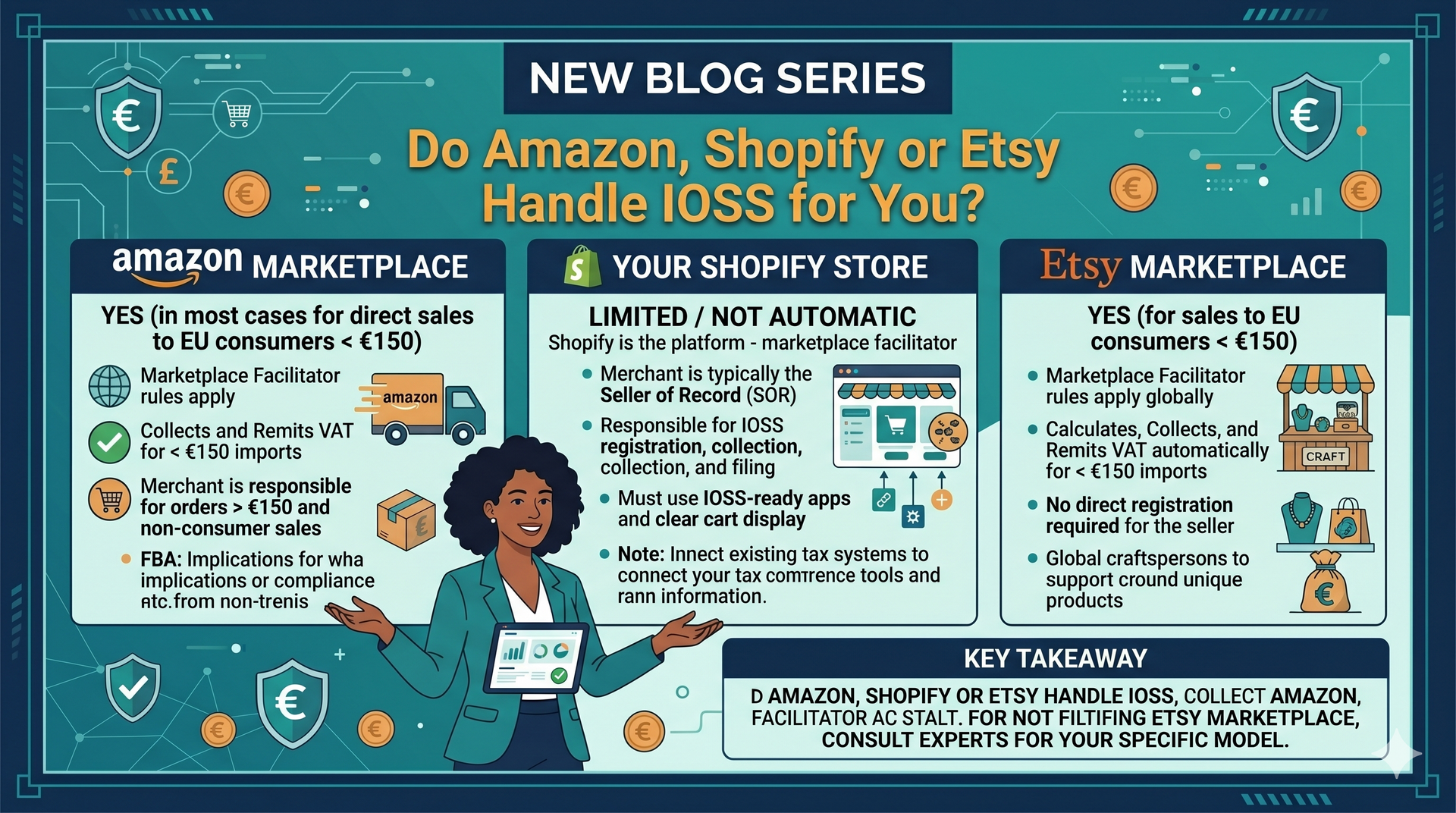
One of the biggest misunderstandings is assuming that Amazon, Etsy or other marketplaces automatically deal with all VAT obligations.
Sometimes they do. Sometimes they only handle part of it. Sometimes they handle it for certain transactions but not others.
Clear as mud.
If you sell through multiple channels — for example your own Shopify site and Amazon — your VAT treatment may differ depending on where the sale happens.
Never assume the platform has fully “sorted the tax side.” It’s worth checking exactly what’s being handled and what still sits with you.
Mistake #2 — Using IOSS for Goods Over €150
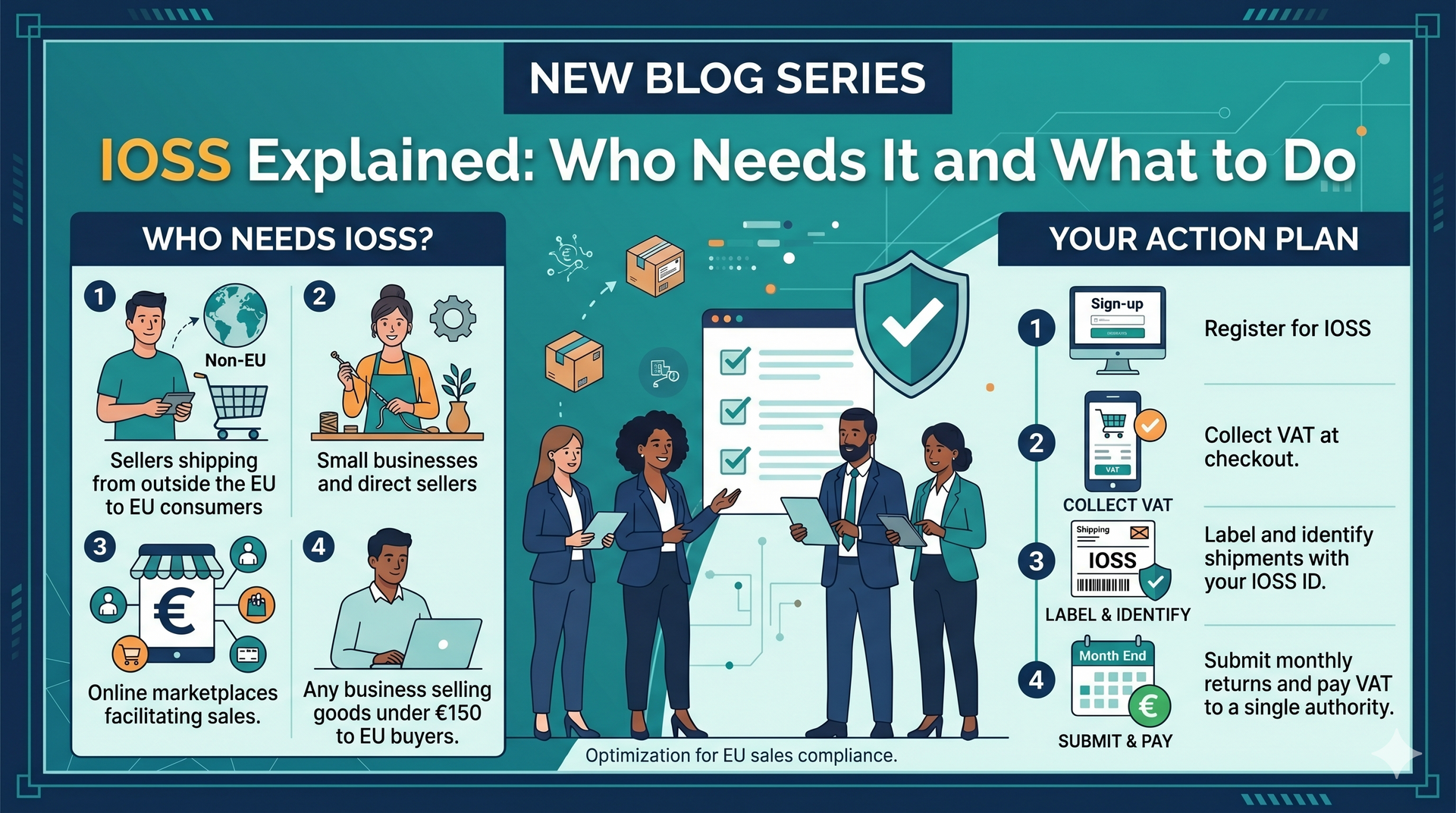
IOSS only applies to consignments valued at €150 or less.
If you try to use IOSS for higher-value shipments, customs issues and delays can follow.
This catches out businesses surprisingly often, especially where:
- Orders contain multiple products
- Bundles push values over the threshold
- Shipping costs are handled incorrectly
If your average order value varies, you need systems that can identify when IOSS applies and when it doesn’t.
Mistake #3 — Charging the Wrong VAT Rate
The EU doesn’t have one single VAT rate.
Every country has its own rates and rules — meaning the VAT charged to a customer in France may differ from Germany, Spain or Ireland.
Some ecommerce businesses accidentally:
- Charge UK VAT instead of EU VAT
- Apply the wrong country’s VAT rate
- Forget reduced rates apply to certain products
This is where compatible ecommerce software becomes very important.
Mistake #4 — Not Understanding Where Stock Is Stored
This is a huge one.
Many ecommerce sellers don’t realise that storing stock inside the EU can create additional VAT obligations.
For example:
- Amazon FBA warehouses
- Third-party fulfilment centres
- Overseas storage providers
If your stock physically sits in an EU country, local VAT registrations may still be required — even if you use IOSS.
In other words: IOSS is helpful, but it’s not a magic “ignore VAT forever” button.
Mistake #5 — Forgetting the Customer Experience
Customers generally don’t care how VAT works.
They do care if:
- Parcels get delayed
- Unexpected charges appear
- Couriers demand extra fees at the door
Poor VAT setup can quickly turn into:
- Refund requests
- Negative reviews
- Abandoned baskets
- Lost repeat business
A smooth checkout experience matters.
Mistake #6 — Leaving It Too Late
Many businesses only look at IOSS once problems start happening.
Usually after:
- Customs delays
- Customer complaints
- Marketplace warnings
- Letters from tax authorities
Fixing issues after the fact is always harder than setting things up properly from the start.
How File Tax Go Can Help
At FTG, we help ecommerce businesses untangle the confusing world of VAT and EU sales.
We can help with:
- Reviewing whether IOSS applies
- Ecommerce VAT guidance
- Understanding marketplace obligations
- Identifying potential compliance risks
Because ecommerce is complicated enough already without surprise customs drama.
Share
You might also like